I once spent a year learning the art of chopping in China.
Why you ask? Why not! Actually it was a cultural misunderstanding as I was under the impression I’d be learning to make Chinese food. You can imagine my disappointment and horror when my teacher brought in a live duck and slit its throat it in front of us the first week of school. This was not what I signed up for.



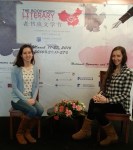 or groups, conferences, book fests, libraries.) Give them hours talking about imaginary scenarios and people and places.
 They’ll need some kind food and drink. Coffee and tea have been proven to stimulate growth in
 If you’re anything like me, then you’ll know that the closer you get to a story the harder it is to objectively question it. You’ve spent so much time there and it works so well in your brain that it’s hard to take that mental step back and look for problems.
 Amidst the transition from finishing my manuscript to the start of the publication cycle, something shifted in me. “Writing” (that is, doing whatever was necessary to get my manuscript published) became another thing to do on an ever-increasing to-do list. I need to re-write that first scene, build a platform, research agents, and the motivation that has always pushed me through my story has dried up.
 The Spinning Pen